The Rise of Quiet Shelving: Books & Objects as Intentional Displays
The bookshelf has always been a portrait. Long before the Instagram "shelfie" gave it a name, the arrangement of objects on a shelf communicated something about the inhabitant — their reading life, their travels, their aesthetic sensibility, their willingness to be read. What has changed in the past decade is the degree of intentionality brought to that communication, and the cultural infrastructure that rewards and codifies it.
The Shelfie as Cultural Form
The term "shelfie" — a photograph of one's bookshelf or display shelving shared on social media — emerged on Instagram around 2013 and has accumulated hundreds of millions of tagged images since. Unlike the selfie, which centres the person, the shelfie centres the curated object world as a proxy for identity. Literary communities, design accounts, and bookstagrammers have built substantial followings around shelf aesthetics, and publishers have responded: book cover design now explicitly considers the visual impact of a spine facing outward on a shelf.
The movement intersects with and was partly catalysed by Marie Kondo's The Life-Changing Magic of Tidying Up (2014, English translation), which sold over 12 million copies worldwide and prompted a generation of readers to reconsider every object in their homes through the filter of intentionality. Kondo's method — retaining only what "sparks joy" — applied to bookshelves produces a radically edited collection in which every visible volume is genuinely chosen, and the shelf itself becomes a statement of considered taste rather than accumulated habit.
The Hardware: Shelving as Furniture
The design of the shelf itself has become part of the conversation. Two systems in particular have achieved cultural totemic status among interiors-conscious consumers.
String Furniture, designed by Nils Strinning in 1949 and still manufactured in Sweden, is perhaps the most enduring modular shelf system in production. Its ladder-frame construction and interchangeable shelves allow configurations from minimal single-shelf displays to room-spanning library walls. String has appeared in the background of Kinfolk shoots, Scandinavian apartment features, and design retrospectives for seven decades — its longevity evidence that some objects transcend trend.
Vitsoe's 606 Universal Shelving System, designed by Dieter Rams in 1960, occupies a similar position. Manufactured in the UK and Germany with hardware that Vitsoe guarantees will remain available indefinitely, the 606 is perhaps the clearest expression of Rams' ten principles of good design applied to furniture. Its E-track mounting system allows infinite reconfiguration without new wall fixings. A Vitsoe 606 installation is a long-term investment — entry configurations start at several hundred pounds — but its aluminium components are guaranteed for life and the system has been documented passing between generations intact.
What Goes on the Shelf: The Curation Principles
Design platform Houzz publishes annual trend data compiled from its 65 million monthly users. Its 2023 Interior Design Trends report noted that "intentional display" — the deliberate arrangement of objects with negative space, mixed-scale groupings, and visible editing — was among the most searched styling concepts on the platform, with a 41 percent year-over-year increase in saves for "styled bookshelf" imagery.
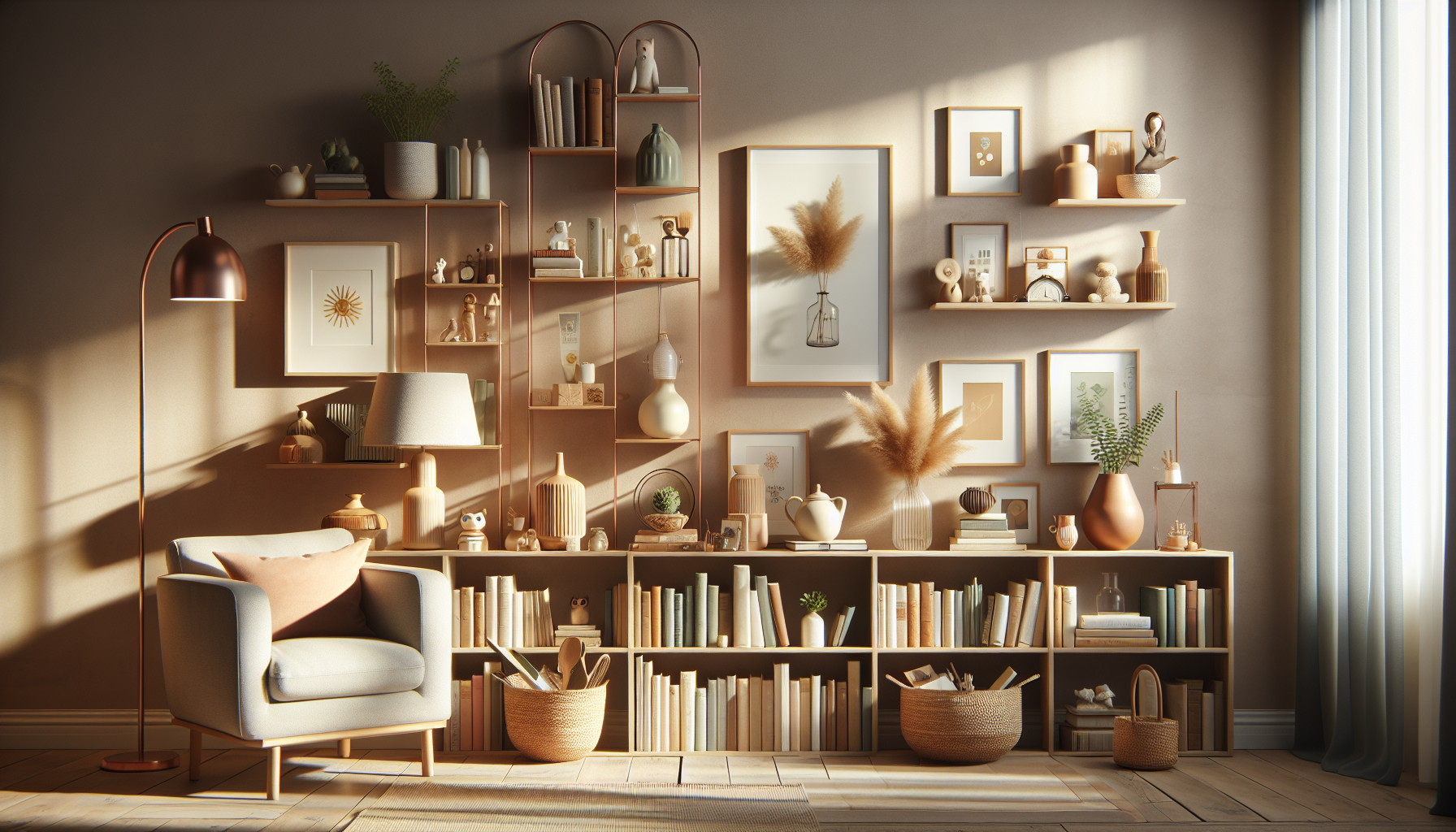
Interior stylists who work specifically with shelving cite consistent principles in editorial and professional contexts. Objects should vary in height and depth. Books displayed spine-out benefit from occasional face-out placement to break rhythm and introduce graphic colour. Natural materials — small sculptures in stone or wood, ceramics, a single dried botanical — provide textural counterweight to printed spines. Negative space, treated as a deliberate design element rather than an absence, prevents the shelf from reading as storage.
The Quiet Shelf: Books Without Performance
A counter-movement to the maximally curated shelfie has emerged among readers who approach their shelves as private libraries rather than public displays. Writers including the critic Rivka Galchen and booksellers interviewed in The Paris Review have written about the satisfaction of shelves organised by personal logic — by when books were read, by colour, by emotional register — rather than by the visual coherence demanded by social media.
The "quiet shelf" — arranged for the inhabitant rather than the camera — represents the terminus of the intentional display spectrum: an entirely private curation in which the only audience is the person who lives there. Both orientations, the social and the private, share a foundational premise: that the objects we choose to display, and the way we arrange them, constitute a meaningful act of self-knowledge.