How Forgotten Textile Techniques Are Inspiring Contemporary Wall Art
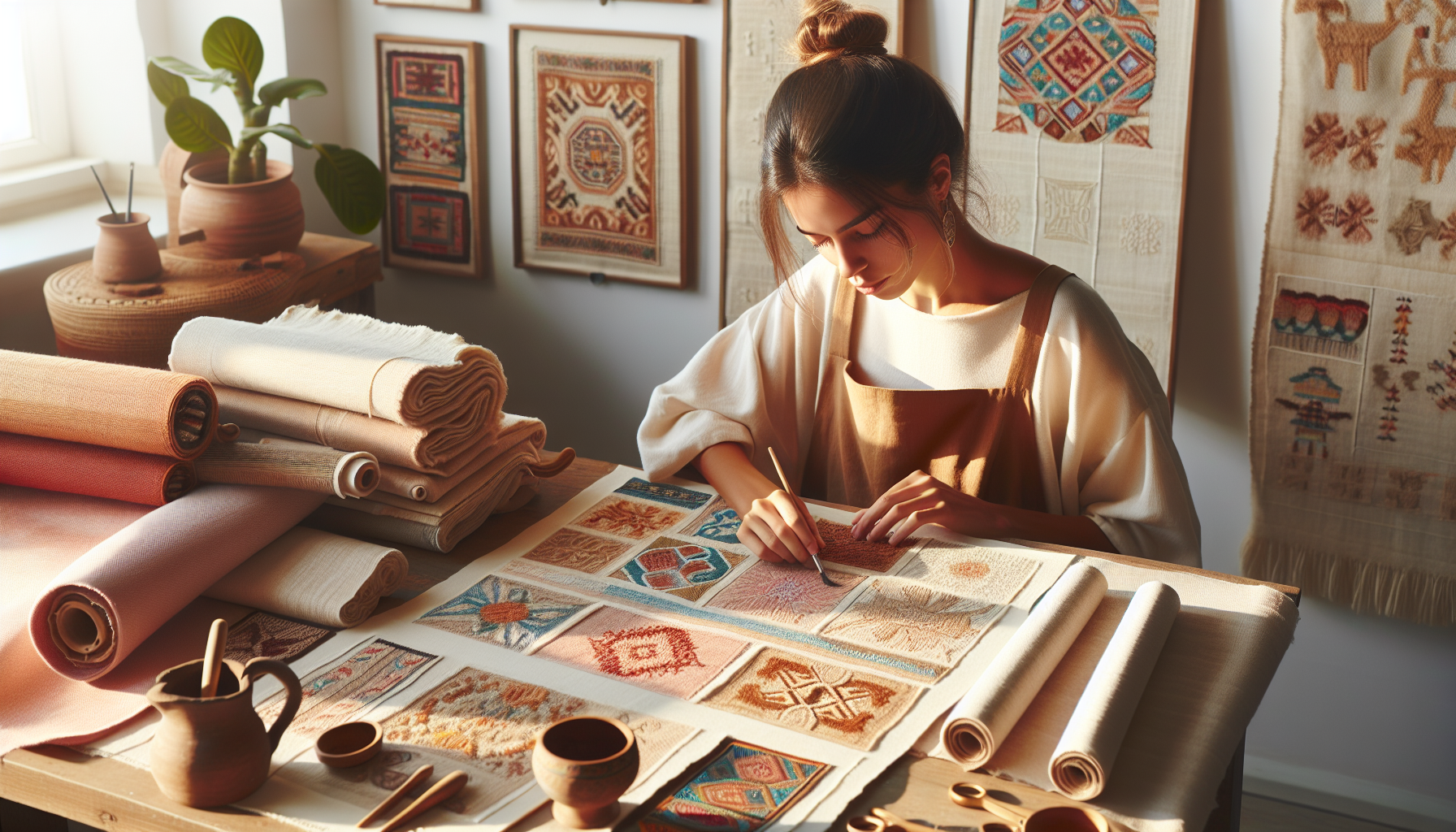
The wall hanging has always occupied an uncomfortable position in Western art hierarchies. Woven, knotted, and embroidered textiles spent much of the twentieth century classified as craft or decorative art — worthy of admiration but categorically distinct from the "fine art" of painting and sculpture. That boundary has been dissolving for decades, and today it is effectively gone. Museum acquisitions, major gallery shows, and a global market for textile-based work signal that fibre art has completed a long-running reclassification from domestic craft to serious contemporary practice.
The Foundational Figures
Sheila Hicks is perhaps the most important living practitioner in the field. Born in 1934 in Nebraska and trained under Josef Albers and George Kubler at Yale, Hicks has worked for six decades to expand the formal and conceptual possibilities of fibre. Her Minimes — small woven panels produced continuously since 1957 — function as a lifelong notebook of material inquiry. Her large-scale installations, including the extraordinary yarn-and-wool column works shown at the 2017 Venice Biennale, demonstrated that textile could operate at architectural scale with the same conceptual authority as any other medium. Hicks's work is held by the Metropolitan Museum of Art, the Centre Pompidou, and the Smithsonian.
The legacy of Magdalena Abakanowicz (1930–2017) is equally formative. The Polish sculptor's Abakans — monumental woven forms that hung from ceilings and occupied space as three-dimensional presences rather than flat wall surfaces — fundamentally challenged the idea of textile as a two-dimensional decorative medium. When Abakanowicz showed the Abakans at the São Paulo Biennale in 1965 to international attention, they announced that fibre could be sculpture. Her influence on subsequent generations of textile artists is incalculable.
Mimi Jung, working in Los Angeles and represented by galleries in New York and London, represents the current generation. Jung's large-scale woven works reference both Bauhaus abstraction and contemporary digital aesthetics — her colour gradients and optical patterning translate weaving's inherent grid into a medium that feels entirely contemporary. Her work has been shown at Friedman Benda in New York and collected by institutions including the San Francisco Museum of Modern Art.
The Institutional Recognition
Museum programming has followed artist practice. The Museum of Modern Art's retrospective of Anni Albers in 2018 was a signal moment: the most prestigious modern art institution in the world was making an unambiguous statement that weaving belonged in its galleries. The show drew over 140,000 visitors and was accompanied by a catalogue that placed Albers's woven work in direct dialogue with abstract painting and typography — a recontextualisation that would have been inconceivable to most art historians fifty years earlier.
The Craft Revival movement, which gathered momentum in the 2010s alongside the maker movement and a broader cultural interest in handmade objects, provided commercial infrastructure for what institutional recognition was providing culturally. Platforms including Etsy, 1stDibs, and specialist gallery-shops created markets for textile art at multiple price points, while publications like Selvedge magazine built dedicated audiences.
Contemporary Techniques and Their Sources
The techniques driving contemporary wall art include tapestry weaving (weft-faced plain weave in which complex imagery is built from coloured yarns), card weaving (a tablet technique producing patterned bands), and Saori weaving — a Japanese method developed by Misao Jo in the 1960s emphasising free, intuitive pattern-making over technical precision. Each has distinct historical roots: European medieval tapestry, pre-Columbian and Central Asian band-weaving traditions, and East Asian handweaving respectively.
What distinguishes the current wave of textile artists is their willingness to work across these traditions promiscuously, combining techniques and referencing sources from Andean textiles to Yoruba strip-weaving to Scandinavian rya rugs within single bodies of work. This cross-cultural fluency is both a product of globalised art education and a reflection of wider cultural conversations about the ownership, attribution, and transformation of traditional forms.
Entering the Market
For collectors, textile wall art is available across a remarkable range. At the entry level, prints of textile work by emerging artists through platforms like Artsy start from a few hundred dollars. Original woven works by early-career artists can be found through galleries specialising in contemporary craft from around $800 to $3,000. Museum-quality works by established practitioners trade in the tens and hundreds of thousands. The market has the depth and transparency that collecting requires.