Forgotten Macramé Wall Hangings Making a Gentle Comeback
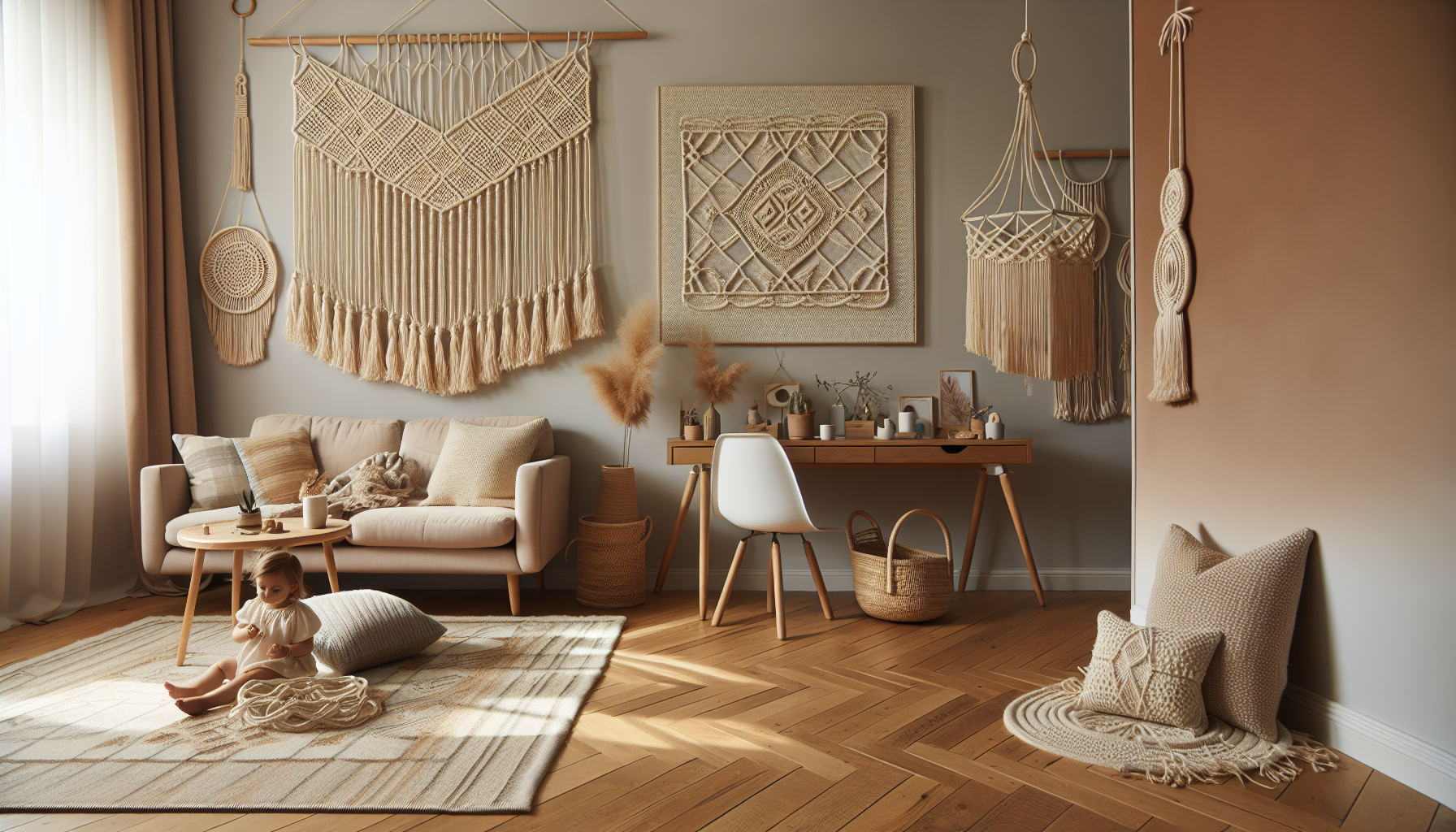
Macramé's cultural arc is one of the more dramatic in modern craft history: from nineteenth-century sailors knotting decorative items on long voyages, to a genuinely widespread domestic craft of the 1970s, to near-total disappearance through the 1980s and 1990s, to a slow but now unmistakable resurgence that has turned knotted textile wall hangings into a fixture of contemporary interior photography, Etsy storefronts, and lifestyle retail.
The History: Longer Than the Cliché Suggests
Macramé's origins predate the 1970s cultural moment that most people associate with it. The word itself derives from the Arabic migramah, meaning fringe or embroidered veil, and the technique was documented in thirteenth-century Arab weavers' work before spreading to Europe through Moorish Spain and North Africa. Victorian England embraced macramé — Queen Mary was documented as an enthusiastic practitioner, and Victorian domestic manuals contain elaborate macramé patterns for curtains, tablecloths, and hammocks.
The 1970s peak — which produced the avocado-green and burnt-orange wall hangings that now trigger a specific kind of nostalgic recognition — was less an origin than an amplification. The decade's broader craft revival, catalysed by the counterculture's interest in handwork and self-sufficiency, drove macramé into millions of homes. Craft supply stores reported macramé cord among their best-selling items throughout the decade; instruction booklets sold in the hundreds of thousands. And then, as the 1980s arrived with their aerobics, sharp shoulders, and clean lines, macramé was left behind — a victim of generational identity politics as much as aesthetic evolution.
The Numbers Behind the Revival
Etsy — the marketplace that has become the primary commercial infrastructure for independent craft sellers — reported gross merchandise sales of $13.3 billion in 2022, according to the company's annual report. Within that ecosystem, handmade wall art, including macramé, represents one of the platform's largest and most consistently growing categories. Searches for "macramé wall hanging" on Etsy have tracked steadily upward since approximately 2015, coinciding with the broader interior design turn toward organic textures, natural fibres, and handmade objects.
The revival intersects with the same cultural currents driving interest in other textile crafts: a reaction against digital saturation, a desire for objects with visible human labour embedded in them, and an interior design moment that prizes organic materials — linen, jute, cotton, wool, rattan — over the synthetic and the mass-produced.
The Practitioners Shaping the Contemporary Form
Emily Katz, based in Portland, Oregon, is among the most widely followed macramé artists in the English-speaking world. Her book Modern Macramé (Ten Speed Press) has sold tens of thousands of copies and is frequently cited as the gateway text for contemporary practitioners. Katz's aesthetic diverges from 1970s macramé in important ways: her colour palette is muted and mineral rather than earthy-bright, her forms are more sculptural and less symmetrical, and her work references contemporary fibre art practice as much as folk craft tradition.
Elsie Goodwin, working under the name Fiber Lab, approaches macramé with a background in textile design and produces large-scale commissions that have been installed in hotels, restaurants, and commercial spaces across the United States. Her commissioned pieces can run to ten feet in height and take several weeks to complete; individual works sell for $2,000 to $10,000 depending on scale and complexity.
Materials and Real Costs
The accessibility of macramé is partly material. The primary supply is cotton macramé cord — typically 3mm or 5mm diameter, sold in 100m or 200m skeins. A 100m skeins of natural single-strand cotton macramé cord retails for approximately $8 to $15 depending on brand and supplier. A standard wall hanging measuring 40cm wide by 60cm long requires roughly 40 to 60m of cord — meaning material cost for a beginner piece can run as little as $5 to $10.
A wooden dowel for mounting — the characteristic hanging element of most wall hangings — costs $1 to $5 depending on diameter and length. Driftwood, foraged or available from craft suppliers, has become a popular alternative, adding textural interest and entirely eliminating the hardware cost.
At the upper end of material investment, naturally dyed single-strand cotton, merino wool yarn, and linen cord significantly elevate both material cost and aesthetic result. Makers working with these materials price finished pieces accordingly: hand-dyed, botanical-coloured pieces from established artists command prices in line with textile art more broadly.
Why It Persists
Macramé persists because it occupies a specific and underserved position in the taxonomy of home textiles. Unlike prints or paintings, it is dimensional — it casts shadows, responds to air movement, and has physical presence in a room. Unlike woven textiles, it requires no loom — the craft is genuinely portable and learnable from video instruction. And unlike most craft practices, a beginner can produce a finished, display-quality piece within a few hours of picking up cord for the first time. The gap between novice and satisfying result is unusually narrow, which makes it one of the more forgiving entry points into handwork.