How Layered Rugs Are Creating Cozier Zones Without Overcrowding
Creating a cozy living space can transform your home into a sanctuary of comfort and style. One simple yet effective method to achieve this is by layering rugs. Without overloading your space, layered rugs introduce texture, warmth, and visual interest to any room. In this guide, you'll discover how to effectively layer rugs to create inviting zones that maximize comfort and aesthetic appeal in your home.
Layered rugs matter because they offer a versatile decorating solution that enhances the functionality and ambiance of your living areas. By strategically placing rugs, you can delineate spaces, add depth to flat surfaces, and refresh the look of a room without a complete overhaul. The art of rug layering extends beyond aesthetics; it also provides practical benefits such as noise reduction, added warmth, and improved room acoustics.
Selecting Your Base Rug
The foundation of any layered rug setup is the base rug, which sets the tone for the entire space. Your base rug should typically be larger and neutral-toned to allow flexibility with other elements.
- Choose a base rug made from durable materials like jute or sisal, which work well in high-traffic areas and provide a textured surface that complements various styles.
- Opt for neutral colors such as beige, gray, or soft patterns that won't clash with other decor elements.
It's crucial to measure your space accurately and select a base rug that leaves enough floor space around the edges to prevent the room from feeling overcrowded. Avoid the mistake of choosing a base rug with a loud pattern, which can limit your layering options and overwhelm the space.
Adding Layered Rugs for Texture
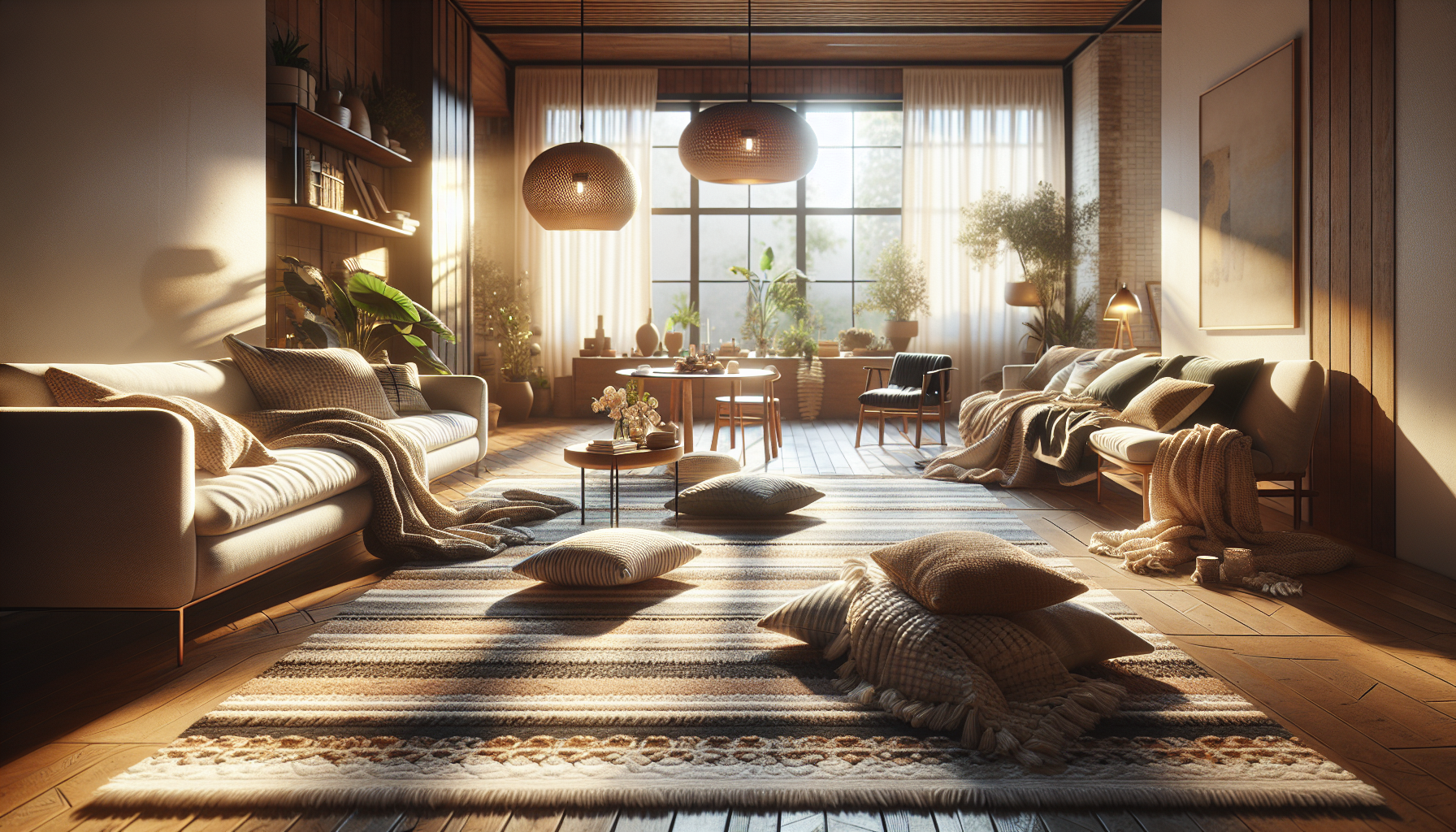
Once you have your base rug in place, the next step is to add layered rugs that bring texture and color into the mix. These rugs are typically smaller and are placed on top of the base rug to create visual contrast and interest.
- Consider using a plush rug like sheepskin or a woven wool rug for added texture and warmth. These materials add softness and can be especially inviting in living rooms or bedrooms.
- Experiment with different shapes, such as round or irregularly shaped rugs, to break the monotony and add dynamic lines to your space.
When layering, ensure that the smaller rug complements the color scheme of your room. It's a good practice to avoid layering rugs that are too similar in color or pattern, as this can blend them into the background instead of creating an intended focal point.
Creating Defined Zones
Layering rugs can effectively define areas within a large space, such as separating a seating area from a dining area in an open-plan room. This technique not only enhances the functionality of your space but also adds a structured aesthetic appeal.
- Position a bold or patterned rug under a coffee table or seating area to anchor the space, drawing attention to that zone without overwhelming the room.
- Use different textures to denote transitions between areas. For instance, a soft, plush rug in the seating area can transition into a more durable, flat-weave rug for a workspace.
Be mindful of the color palette and ensure that each rug contributes to a cohesive look. Avoid using too many conflicting patterns, which can create visual chaos rather than harmony.
Seasonal Adaptations and Styling Tips
Layered rugs offer opportunities for seasonal styling and updates. By swapping out or adding rugs, you can refresh your space throughout the year without major redecorating.
- In colder months, introduce thicker, high-pile rugs to add warmth and a sense of coziness. Opt for deeper hues or jewel tones that evoke warmth and comfort.
- For warmer seasons, consider lighter, breathable materials like cotton or linen, in brighter or pastel colors, to keep the space fresh and airy.
Remember to balance style with practicality. Avoid overly delicate materials in high-traffic areas or homes with pets. Ensure all rugs are securely placed to prevent slipping, using rug pads if necessary.
Common Pitfalls and How to Avoid Them
While rug layering can be a wonderful way to enhance your home, there are common mistakes that can detract from your space's harmony.
- Avoid using too many small rugs; they can create a cluttered look. Stick to a maximum of two or three rugs in one area for a balanced composition.
- Ensure rugs are proportionate to the furniture and space to prevent an imbalanced appearance. A rug that's too small under a dining table, for example, can look out of place.
Consider the maintenance and cleaning aspects of your rug choices. Easy-to-clean materials are ideal for homes with children or pets. Regular vacuuming and prompt stain treatment help maintain their appearance and longevity.
In conclusion, layering rugs is a savvy interior design strategy that can transform the atmosphere of your home. Start with one room and experiment with different textures and patterns until you find the perfect combination that suits your style and functional needs. By making small, intentional changes, you'll enjoy cumulative benefits such as increased comfort and a personalized living space. Remember to have fun and adapt your choices to reflect your unique taste and lifestyle.
Further Reading
For more on this topic, explore: Architectural Digest, Dezeen, Healthline.