Forgotten Woven Wall Hangings Making a Strong Comeback
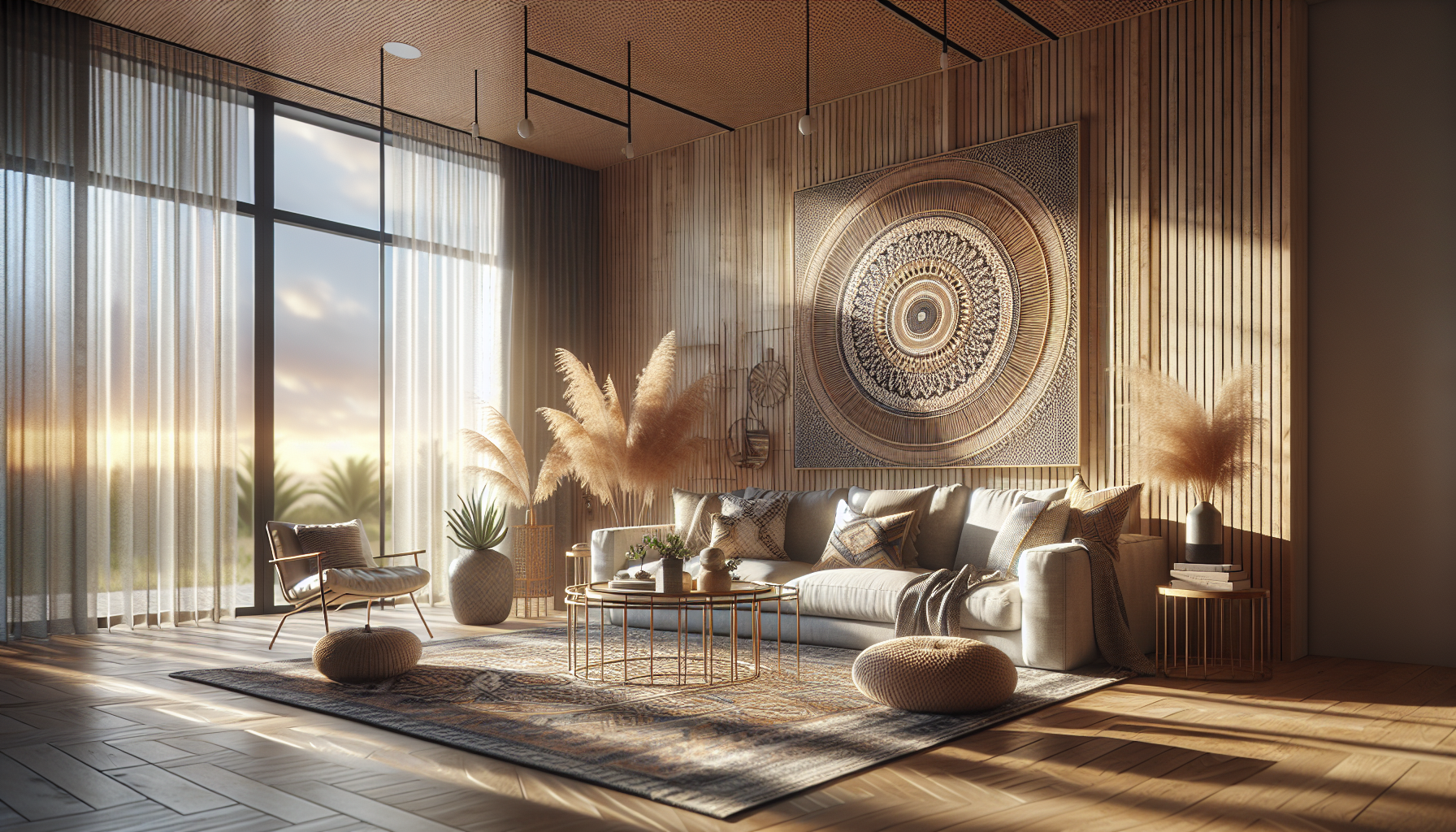
Weaving is one of humanity's oldest technologies. The over-and-under interlacing of perpendicular threads — warp and weft — is documented archaeologically from at least 6000 BCE and appears independently across every culture that has produced textiles. It is also, in its contemporary revival as a domestic craft and as a medium for serious wall art, one of the more interesting examples of how traditional techniques accumulate new meaning when they are taken up in radically different cultural contexts.
From Bauhaus to Brooklyn: The Woven Wall Hanging's Arc
The modern artistic lineage of the woven wall hanging passes inescapably through the Bauhaus weaving workshop, which operated in Dessau from 1925 to 1932 under the direction of Anni Albers. The workshop — formally titled "Bauhaus Werkstatt für Weberei" — produced not only textiles but a theoretical framework for understanding weaving as a design discipline equal in rigour to architecture or typography. Albers's own weavings, now held by museums including MoMA, the Tate, and the Museum of Arts and Design, are among the most influential textiles of the twentieth century. Her 1965 book On Weaving remains a standard reference in textile education.
The 2018 Anni Albers retrospective at Tate Modern drew over 140,000 visitors — a remarkable attendance for an exhibition devoted to textiles — and catalysed renewed interest in weaving among designers, artists, and a wider public who had encountered Albers's work only as historical footnote rather than living influence. The show's catalogue, which placed Albers's weavings in direct dialogue with abstract painting and architecture, did significant cultural work in repositioning the loom as a serious creative instrument.
Contemporary Practitioners
Maryanne Moodie, an Australian-born weaver based in New York, is among the most influential practitioners in the current revival. Her book On the Loom (Abrams, 2016) sold over 50,000 copies and is credited by many contemporary weavers as their entry point into the practice. Moodie's aesthetic — layered yarns, mixed fibres, deliberately irregular edges — defined the visual language of the contemporary frame loom wall hanging and has been widely imitated across Instagram and Pinterest.
Natalie Novak, working in Sydney, takes a more formal approach: her large-scale commissions for commercial and domestic spaces use traditional tapestry techniques to produce image-based works that reference painting and photography. Her pieces can take months to complete and are collected as fine art. Novak's practice demonstrates the range available within the medium: from the meditative simplicity of a small frame loom piece to complex narrative works requiring years of training to execute.
Equipment: The Real Costs of Starting
The accessibility of weaving as a craft is significantly enhanced by the availability of inexpensive frame looms that require no mechanical complexity. A basic wooden frame loom — a rectangular frame with evenly-spaced nails or pegs for warping — can be purchased for $20 to $50 from craft suppliers including Schacht Spindle Company, Beka, and Ashford. These entry-level looms are suitable for wall hangings up to approximately 30cm wide.
For larger or more technically ambitious work, a rigid heddle loom — a simple table loom that allows faster weaving and more consistent tension — starts at around $100 to $150 for entry-level models from Ashford or Kromski. A floor loom, which enables complex multi-shaft weaving of the kind used in professional textile production, represents a serious investment: $500 to $5,000 and beyond depending on the number of shafts and the quality of construction.
Yarn is the variable cost. Natural fibres — cotton, wool, linen, silk — produce textiles that age well and have satisfying weight and texture. A starting yarn collection adequate for several wall hangings can be assembled for $30 to $60 from craft suppliers or destash sales on fibre arts platforms.
Why Wall Hangings Specifically
The wall hanging format suits weaving particularly well because it foregrounds the medium's inherent qualities: the texture of crossed threads, the interplay of colour in weft-facing weave, the fringe or finished edge as design element. Unlike yardage weaving — producing fabric for sewing — wall art weaving has no functional constraint beyond the structural. The weaver can mix fibres, introduce found materials, leave deliberate imperfections, and finish edges expressively. This freedom is precisely what distinguishes contemporary wall weaving from industrial textile production and gives it its artistic character.