Why Handheld Camera Work Is Redefining Intimacy in Independent Cinema
The Camera as Participant: Handheld Work and the Ethics of Intimacy in Independent Film
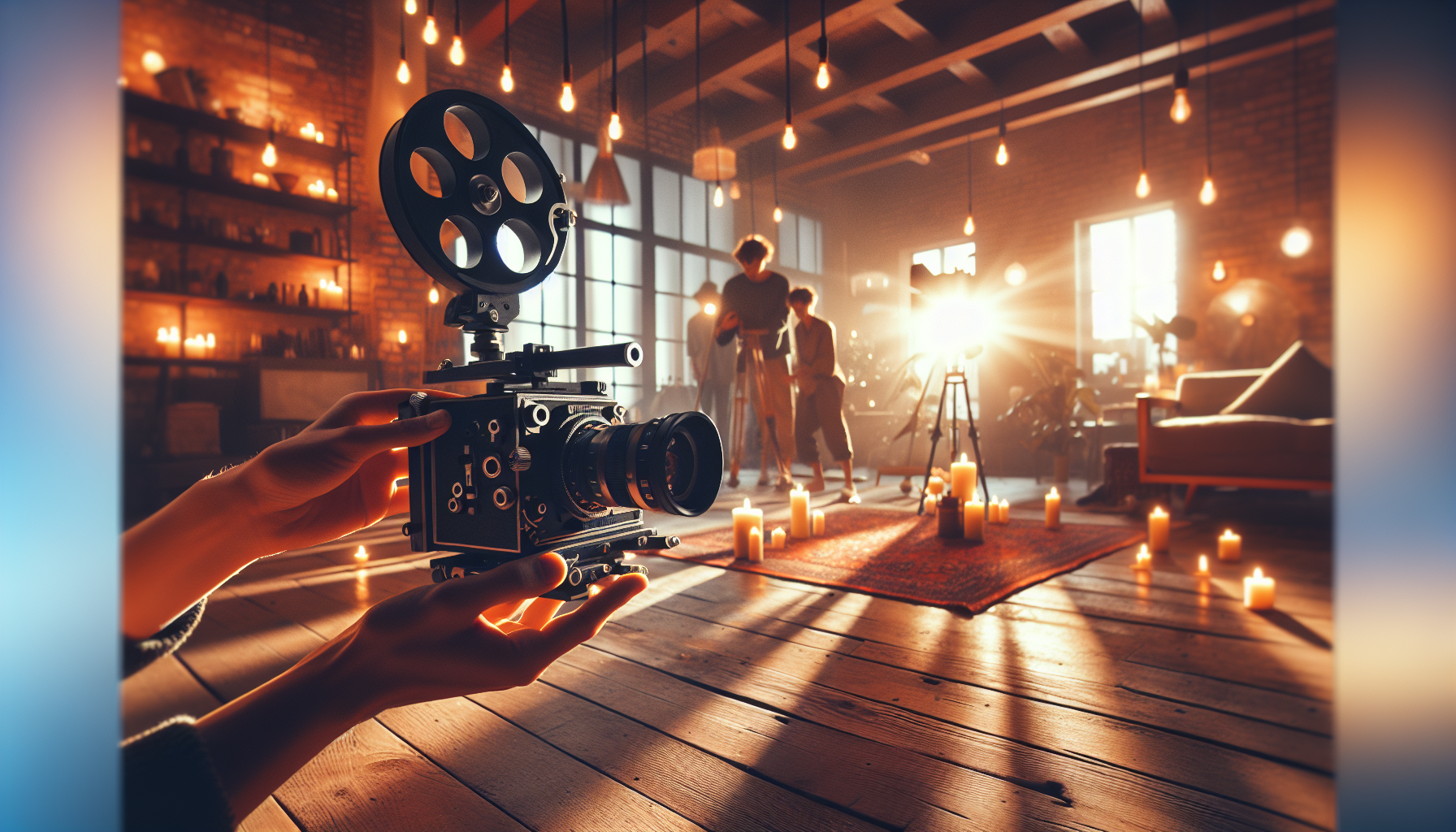
A camera mounted on a tripod announces its presence — it occupies a fixed position in relation to its subject, establishing a clear separation between the observer and the observed. A handheld camera is different. It moves with the breath of the operator, responds to sudden shifts in action, and implies a proximity to events that the tripod shot cannot. This distinction is not merely technical; it carries an argument about the relationship between filmmaker and subject that has driven the most significant movement in handheld aesthetics, from Dogme 95 to the Safdie Brothers.
Dogme 95 and the Manifesto
In 1995, Lars von Trier and Thomas Vinterberg published the Dogme 95 Manifesto and its accompanying "Vow of Chastity," a set of rules governing film production that included the requirement that the camera must be hand-held. The manifesto's purpose was polemical — it was designed to strip away what its authors saw as the artifice of mainstream filmmaking and force directors toward a documentary immediacy that was impossible with stabilized equipment.
The films produced under the Dogme rules — Vinterberg's Festen (1998), von Trier's The Idiots (1998), Harmony Korine's julien donkey-boy (1999) — vary enormously in quality and approach, but they collectively established handheld as a marker of a particular kind of cinematic commitment: to the present tense of the scene rather than its choreographic perfection. The movement's influence extended well beyond its certified members, normalizing an aesthetic that had previously been associated primarily with documentary and low-budget necessity.
Tangerine: The iPhone Revolution
Sean Baker's Tangerine (2015) was shot almost entirely on three iPhone 5s devices modified with the Filmic Pro app and an anamorphic lens adapter ($150 per lens). Its production budget was approximately $100,000. The film follows two transgender sex workers through a single day in Los Angeles, and its visual style — oversaturated color, handheld intimacy, the specific optical characteristics of a phone camera shooting in bright sunlight — was not a workaround for its budget but a deliberate formal choice that matched the film's subject matter.
The phone camera's small sensor produces a compressed depth of field in bright light that is quite different from traditional cinematography — nearly everything is in focus simultaneously, which paradoxically reduces the ability to control where the viewer's eye goes and increases the impression of a candid, observed reality. Baker and cinematographer Radium Cheung used this characteristic intentionally, allowing the image to be as busy and overwhelming as the environment it was documenting.
The film's Sundance premiere and subsequent theatrical release generated significant discussion about what constitutes "professional" filmmaking equipment and established the iPhone as a legitimate production tool for serious dramatic work.
The Safdie Brothers: Good Time and Uncut Gems
Josh and Benny Safdie's Good Time (2017) and Uncut Gems (2019) use handheld camera as the primary instrument of their sustained anxiety. Cinematographer Sean Price Williams shot Good Time with a textured, grain-heavy image that suggests documentary observation of events too chaotic to have been choreographed. The camera follows, in the fullest sense — it moves in response to what characters do rather than directing them toward a predetermined composition.
Uncut Gems (cinematography by Darius Khondji) maintains this principle at a larger production scale, with a budget of approximately $19 million and a cast including Adam Sandler in a career-defining performance that earned no formal award nominations but generated the most sustained critical discussion of any performance of 2019. The film earned $50 million theatrically and became A24's highest-grossing film to that point.
The Safdies' approach — handheld, long takes, multiple cameras running simultaneously, improvisation encouraged within scripted structures — produces films in which the viewer cannot predict where the camera will be in the next shot. This unpredictability is itself a form of dread, applied rigorously across narratives that are in any case about characters whose situation is out of control.
The Stabilizer Reaction
The widespread adoption of mechanical and electronic stabilization tools — the Steadicam (invented 1974), the DJI Ronin gimbal system (2014), in-body image stabilization in modern cameras — has paradoxically increased the cultural signification of handheld work. When stabilization is the default, the deliberate choice of handheld carries meaning. The shaking image is now a semantic choice rather than a technological default, and filmmakers working in this idiom are aware that their audiences read it as such.