The Ultimate Guide to Intentional Packing for Mindful Travel
The average American checked bag fee is $35 each way on major carriers, $40 on some; Delta and United both raised checked bag fees to $40 for the first bag in 2024. For a round trip, that's $70–$80 per bag, per person — roughly the cost of a night in a decent hostel. The argument for packing lighter is partly economic, partly logistical (no waiting at baggage claim, no lost luggage risk), and partly experiential: a 22-liter pack that fits under the seat produces a different relationship to movement through a city than a 26-kg checked suitcase.
The TSA 3-1-1 Rule and Carry-On Dimensions
TSA's 3-1-1 rule: liquids in containers of 3.4 oz (100ml) or less, placed in a single quart-sized clear plastic bag, one bag per person. This rule applies to liquids, gels, aerosols, creams, and pastes. Exceptions include medications (declared at screening), baby formula, and breast milk. The practical implication: full-size toiletries must be checked or replaced at destination. Most hotel chains and many hostels provide shampoo and body wash; a solid shampoo bar (GoToob or Lush, $12–$14) eliminates the liquid category entirely for hair care.
Airline Carry-On Size Comparison
| Airline | Max Carry-On (LxWxH) | Personal Item | Carry-On Fee |
|---|---|---|---|
| Delta | 22 x 14 x 9 in | 18 x 14 x 8 in | Free (most fares) |
| United | 22 x 14 x 9 in | 17 x 10 x 9 in | Free (most fares) |
| American | 22 x 14 x 9 in | 18 x 14 x 8 in | Free (most fares) |
| Southwest | 24 x 16 x 10 in | 18.5 x 8.5 x 13.5 in | Free (all fares) |
| Spirit | 22 x 18 x 10 in | 18 x 14 x 8 in | $49–$79 at gate |
| Frontier | 24 x 16 x 10 in | 18 x 14 x 8 in | $39–$69 at gate |
| Ryanair (EU) | 40 x 20 x 25 cm | 40 x 20 x 25 cm | €/£25–39 for overhead bin |
| EasyJet (EU) | 56 x 45 x 25 cm | 45 x 36 x 20 cm | Free in overhead bin |
Bag Selection: What the Numbers Mean
A 40-liter bag is the ceiling for a one-bag carry-on traveler. At 40 liters, you're at the upper edge of most airline overhead bin allowances. Specific recommendations by use case:
- Osprey Farpoint 40 ($180): travel-specific design, detachable day pack (15L), padded shoulder straps that zip away. Dimensions: 21 x 14 x 9 in. Best for travelers who want a structured pack with organization.
- Peak Design Travel Backpack 45L ($299): origami-style organization, camera cube compatible, converts between backpack and briefcase carry. Heavier (1.8kg) but the internal organization is the most thoughtful of any pack at this price.
- Away Carry-On ($295): hard-shell spinner, 39.8L, built-in TSA-approved combination lock, USB charging port (battery removable for TSA). Best for city travel where you roll rather than carry.
- Tortuga Setout 45L ($179): specifically designed around airline carry-on dimensions, clamshell opening, laptop compartment accessible from outside. Front-loading design makes packing and access more like a suitcase than a top-loading pack.
- REI Co-op Trail 40 ($119): budget option with functional suspension, less travel-specific but functional for shorter trips or travelers who prioritize hiking capability over urban carry.
KonMari and Bundle Wrapping
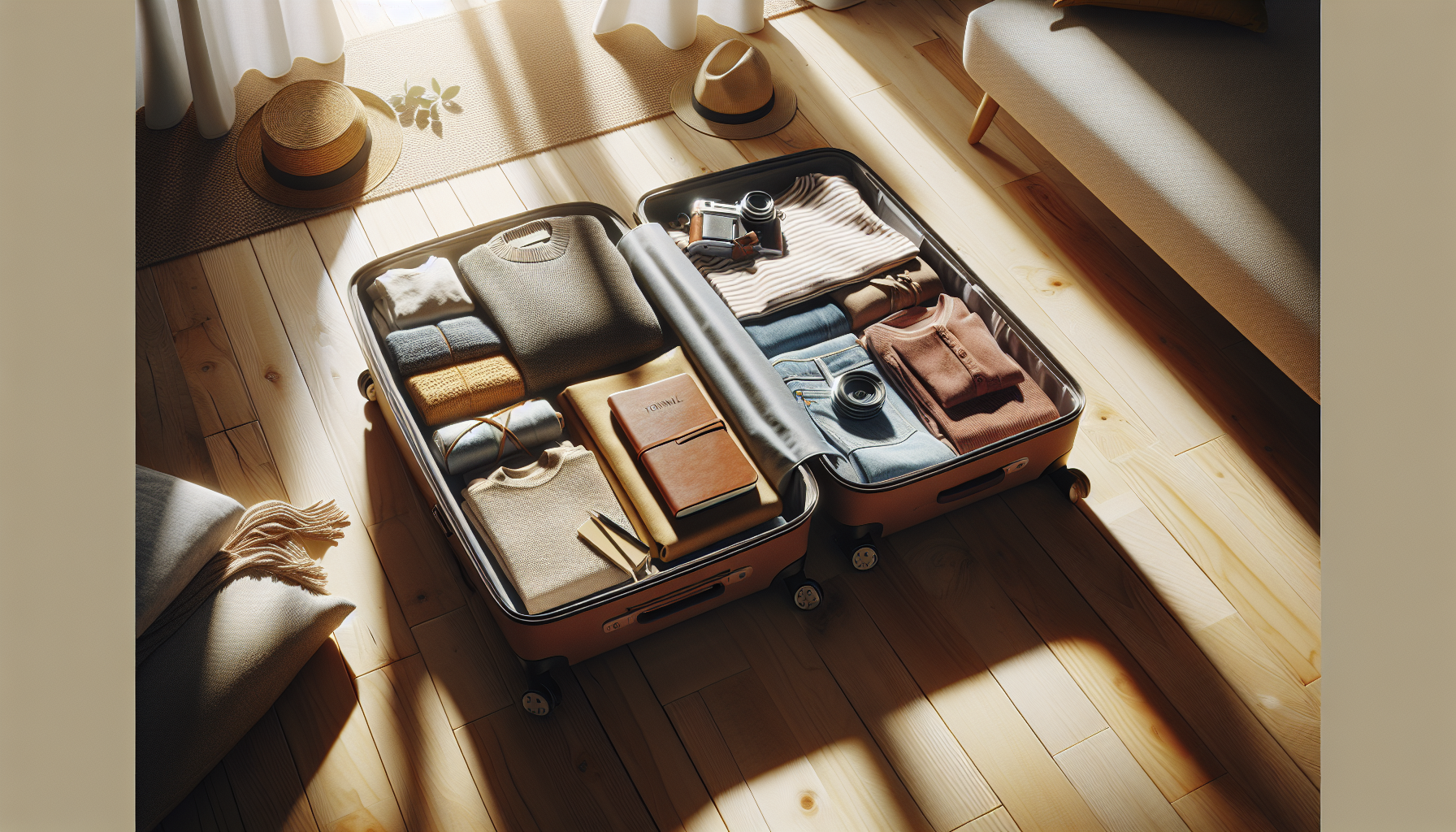
Marie Kondo's folding method (vertical file folding — folding items into thirds horizontally, then into thirds or quarters vertically to stand upright) doubles clothing capacity in packing cubes compared to flat folding. The practical benefit is visibility: every item is visible without removing others. Bundle wrapping — the technique developed by travel writer Doug Dyment where clothing is wrapped around a central core object in sequence, then unrolled flat at destination — minimizes wrinkles better than any folding method for dress shirts and trousers. The method requires a specific packing sequence (largest, softest items first) and takes 5–10 minutes to learn.
Packing cubes (Eagle Creek, $35 for a 3-cube set; Compression cubes from Peak Design, $49 for 2) compress soft goods meaningfully. A medium compression cube holds 3 days of clothing; two medium cubes plus a small one for underwear and socks handle a week's clothing in a 40L bag with room for shoes and a layer.
What to Leave Behind
The items most frequently reported as unnecessary by experienced one-bag travelers: more than 2 pairs of shoes (one on feet, one packed); full-size book (Kindle Paperwhite weighs 182g; a 400-page hardback weighs 600–800g); more than 2 pairs of jeans (they take 1–1.5 liters of pack space each); "just in case" gear that addresses scenarios that don't actually occur on the specific trip being planned. The discipline required is not organizational but anticipatory: packing for the trip you're actually taking rather than the trip you might hypothetically be taking.