The Subtle Power of Monochromatic Looks Dominating Recent Catwalks
The Disciplined Palette: How Monochromatic Dressing Became Fashion's Most Demanding Exercise
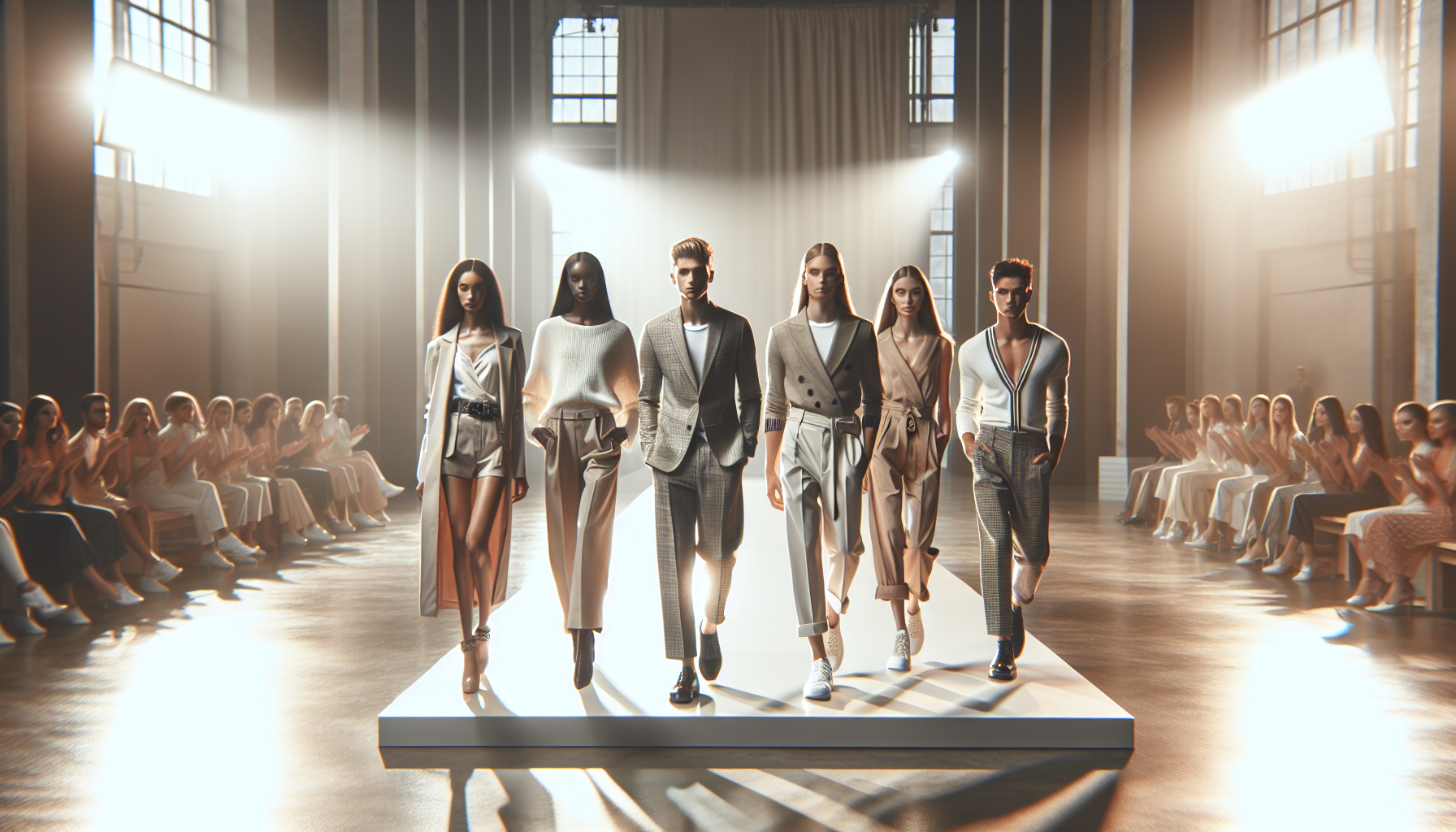
Wearing one color from head to toe sounds simple. In practice, it is one of the most technically demanding approaches to getting dressed — requiring attention to undertone consistency, texture variation, and proportion that the easiest "throw-on" outfits never demand. The resurgence of monochromatic dressing as a dominant aesthetic in the early 2020s was not accidental; it emerged from a specific convergence of minimalist luxury brands reaching cultural saturation, color forecasting institutions codifying the trend, and a broader cultural appetite for coherence over chaos in personal presentation.
The Row and the Olsen Standard
Mary-Kate and Ashley Olsen launched The Row in 2006 as a cashmere t-shirt company and have built it into one of the most critically respected and commercially powerful luxury brands operating today, with revenues estimated by Business of Fashion at over $350 million annually by 2023. The brand's aesthetic — exceptional fabric quality, minimal hardware or branding, palette restricted primarily to black, white, ivory, camel, and grey — has made it the reference point for what Lyst calls "stealth wealth" dressing.
At the Autumn/Winter 2024 show in New York, The Row presented looks built almost entirely within single-tone ranges: off-white cashmere coats over ivory silk trousers, charcoal wool suiting with graphite leather accessories. The effect was not monotonous but deeply considered — each piece chosen to create slight tonal variation that reads as sophistication rather than accident. The show was widely covered not just in fashion press but in mainstream media, with The New York Times and The Guardian both noting The Row's influence on how younger consumers were beginning to approach building wardrobes.
The Row's approach demonstrates a fundamental principle of successful monochromatic dressing: the interest must come from texture and silhouette variation rather than color contrast. An off-white silk shirt reads differently from an off-white cashmere knit and differently again from an off-white structured cotton blazer — and the skill is in orchestrating these material differences within a narrow color range.
Max Mara: Camel and the Building of a Brand Color
Max Mara, the Reggio Emilia-based house founded by Achille Maramotti in 1951, has systematically built a brand identity around a specific palette dominated by camel, tobacco, and warm neutrals. The 101801 coat — the house's signature double-faced camel overcoat, first introduced in 1981 and still one of the brand's best-selling items at approximately £1,900 — functions as the foundation piece around which entire monochromatic looks are constructed.
At Max Mara's Autumn/Winter 2024 show in Milan, creative director Ian Griffiths sent out eleven consecutive looks in variations of camel, from palest sand to deep tobacco, each differentiated by texture: shearling, smooth wool, bouclé, printed silk. The cumulative effect was one of the most discussed moments of Milan Fashion Week, with Vogue Italia's Franca Sozzani Award recipient Eleonora Carisi writing that it "demonstrated how a single color could contain an entire season."
The commercial logic of this approach is not accidental. Max Mara sells coordinating pieces across its full range, and the consistent palette allows customers to build wardrobes where every item works with every other item — a genuine functional advantage that the brand's marketing has been explicit about communicating for decades.
Jil Sander and the Ethics of Restraint
Jil Sander's original tenure at her eponymous house (1968-1999, with returns in 2003-2004 and 2012-2013) established a vocabulary of extreme minimalism — single-material garments in single colors, cut with architectural precision, stripped of all ornamental detail. The current creative directors Lucie and Luke Meier have maintained this foundational ethos while introducing a slightly warmer material sensibility.
The Autumn/Winter 2024 Jil Sander collection used navy, ecru, and a specific warm grey across looks that demonstrated the full spectrum of monochromatic possibility: a single navy look that moved from structured coat to fluid trouser to barely-there sandal, each piece in a slightly different navy — cobalt approaching, slate receding. The Meiers have spoken in interviews with AnOther Magazine about their interest in "the color that holds its breath" — hues that contain multiple possibilities simultaneously.
Pantone's Role in Trend Architecture
The Pantone Color Institute, founded in 1963 and now a division of X-Rite following a 2007 acquisition, has become one of the most powerful forces in translating color trends across industries. The institute's annual Color of the Year designation — Very Peri (PANTONE 17-3938) in 2022, Viva Magenta (PANTONE 18-1750) in 2023, Peach Fuzz (PANTONE 13-1023) in 2024 — directly influences everything from runway collections to automotive paint and interior design.
But Pantone's more granular influence on monochromatic dressing comes through its Fashion, Home + Interiors (FHI) Color System, which gives designers, manufacturers, and retailers a shared language for specifying and communicating colors. When a designer specifies Pantone TCX 19-0303 (Jet Black) rather than simply "black," every element of a monochromatic look can be calibrated to the same reference — ensuring that the coat, the trouser, and the shoe all occupy the same point in color space rather than adjacent but misaligned ones.
F/W 2024: The Season Monochrome Dominated
The Autumn/Winter 2024 season was widely analyzed as a watershed moment for monochromatic dressing. Beyond The Row and Max Mara, Bottega Veneta under Matthieu Blazy sent out consistently single-tone looks in terracotta, forest green, and midnight blue. Loro Piana's collection, shown to press and clients rather than on a public runway, was reported by Vogue to have been built almost entirely around single-color dressing in the brand's characteristic palette of natural fibers and earth tones.
The Lyst Index reported a 41% increase in searches for "monochrome outfit" in the weeks following the F/W 2024 shows, with the largest increases recorded in the US, Germany, and South Korea. "Tonal dressing" as a search term increased 67% year-on-year for Q1 2024, according to Lyst's quarterly trend report.
Building a Monochromatic Wardrobe: Practical Guidance
The first challenge in monochromatic dressing is understanding that colors that share a name are not the same color. There are hundreds of blues, and placing an electric cornflower blue shirt under an ink navy blazer creates a discordant "almost match" that is worse than obvious contrast. The most successful practitioners of tonal dressing either work within the same color family with deliberate material variation, or they match very precisely — investing time in in-store assessment under natural light rather than relying on digital product photography.
Undertone consistency is the second variable. A warm beige and a cool taupe are both "neutral" but will clash at close range. The Row's palette works partly because it is organized around warm undertones throughout — the ivory reads warm, the camel reads warm, the tobacco reads warm. Mixing a warm ivory with a cool chalky white breaks the spell.
The third element is proportion play. Without color contrast to break up a silhouette, proportion becomes the primary visual variable. A monochromatic look in one unbroken volume becomes a column; varying proportion — oversized top, slim trouser — introduces structure that color contrast would otherwise provide.
Sources & Further Reading
- Business of Fashion, "The Row's Quiet Dominance," 2023 — businessoffashion.com
- Lyst Index Q1 2024 Trend Report — lyst.com
- Vogue Runway, Max Mara A/W 2024 review — vogue.com
- AnOther Magazine, Lucie and Luke Meier interview, 2023 — anothermag.com
- Pantone Color Institute, Fashion Color Trend Report — pantone.com
- Max Mara official history — maxmara.com