The Rise of Asymmetrical Necklines in Inclusive Runway Casting
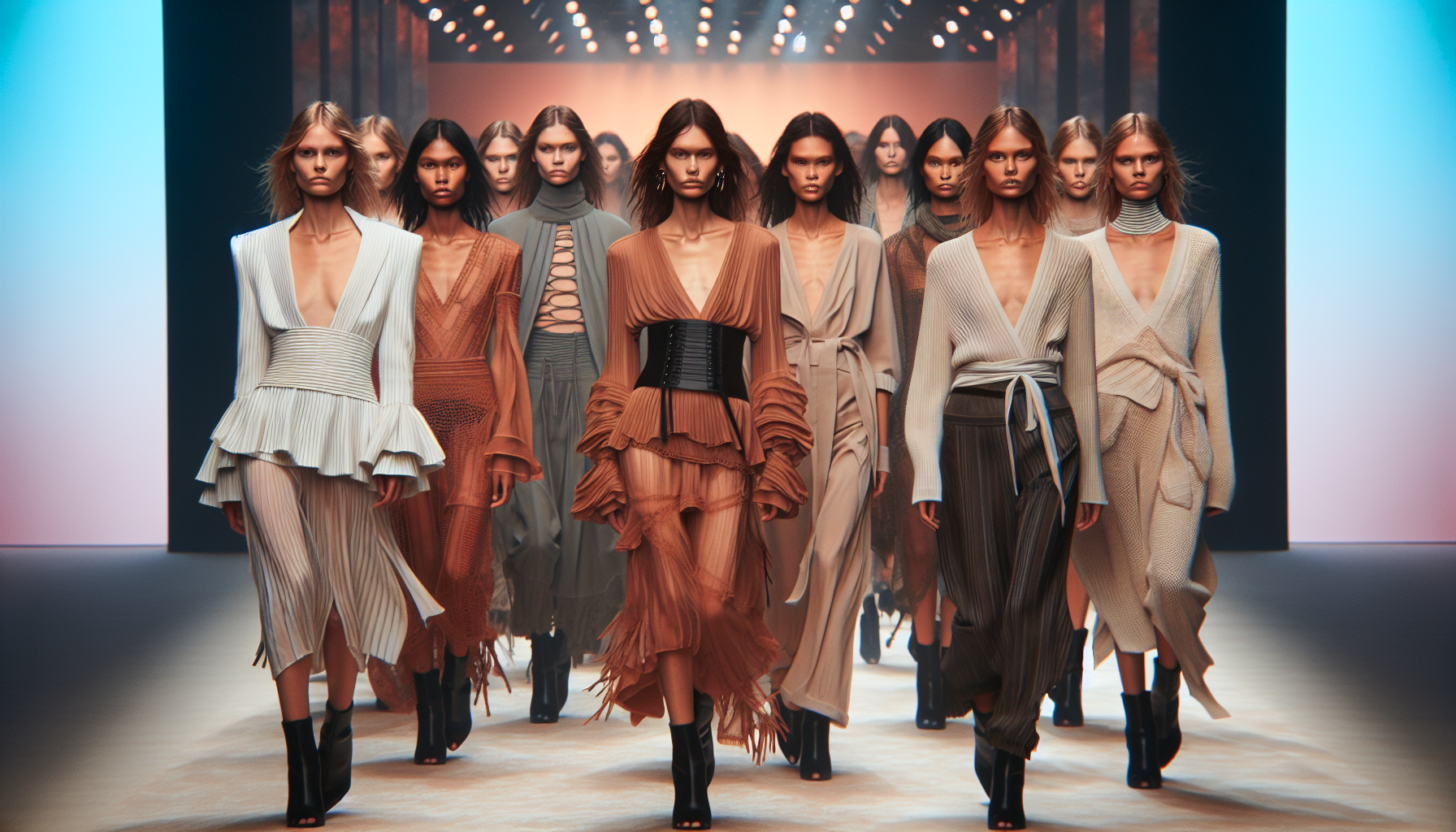
Asymmetrical Necklines and the New Inclusive Runway: Who Gets to Wear the Cut
The asymmetrical neckline — a design element in which one shoulder sits higher than the other, or in which the neckline drops at a single diagonal rather than in a symmetric curve — has appeared in fashion across centuries, from ancient Grecian draping to 1970s disco. Its contemporary iteration is inseparable from a broader conversation about whose bodies appear on runways and in campaigns, and how design choices read differently across different body types and lived experiences. Understanding the current moment requires looking at both the design itself and the casting decisions that have placed it at the center of fashion's equity reckoning.
Gucci Under Alessandro Michele and the Inclusive Moment
Alessandro Michele's tenure at Gucci (2015-2022) was defined by maximalism, eclecticism, and a deliberate expansion of who appeared in the brand's visual world. Michele consistently cast models who did not conform to the industry's historic sample-size standard, and the asymmetrical and one-shoulder designs that appeared throughout his collections were photographed on bodies of varying sizes and abilities in a way that was genuinely unusual for a house of Gucci's scale and heritage.
Paloma Elsesser, the plus-size model who has become one of the most significant figures in contemporary fashion's body diversity movement, appeared in multiple Gucci campaigns under Michele. Her presence in asymmetrical neckline looks was not incidental — the diagonal line of an off-shoulder or one-shoulder garment creates a visual that interacts differently with a fuller bust and more generous frame than with a straight-line sample-size body, and Michele's team styled these pieces specifically to those interactions rather than defaulting to the dressing approach developed for a size 6.
Elsesser has spoken in interviews with i-D Magazine about the specific experience of wearing asymmetrical cuts: "The diagonal line does something to how the eye travels across your body. It creates movement and interest rather than just sitting there. When it's designed with your actual body in mind rather than assumed on a smaller frame, it's one of the most flattering cuts there is."
Aaron Philip and the Question of Adaptive Design
Aaron Philip, the Black transgender disabled model who became the first person combining those identities to sign with a major agency (Elite Model Management, 2018), has worked extensively with designers including Moschino, Swarovski, and Chromat, and has appeared in editorials for publications including Paper Magazine and i-D. Philip's presence on runways and in campaigns raises specific questions about how garments designed for standing, ambulatory bodies translate to a wheelchair user — questions that asymmetrical necklines make particularly visible.
A one-shoulder or asymmetric neckline reads entirely differently when the body wearing it is seated. The shoulder drop that creates a graceful diagonal on a standing figure may create a different visual dynamic when photographed from a different angle and in a different relationship to gravity. Philip has noted in conversations with Vogue that some designers engage meaningfully with these questions during fittings, while others simply place garments on her body without considering how the design logic shifts.
The broader question Philip's presence raises — how much of fashion design implicitly assumes a specific body configuration and movement pattern — is one that the industry has begun to address through adaptive fashion initiatives, including Tommy Hilfiger's Tommy Adaptive line (launched 2017) and Zappos' Adaptive program, but which remains largely unresolved at the level of runway design.
Sinead Burke and the Architecture of Access
Sinead Burke, the Irish educator, author, and activist who has achondroplasia (a form of dwarfism), became the first little person to appear on the cover of Vogue when she was featured on the March 2019 cover of British Vogue under Edward Enninful's editorship. Burke's ongoing presence in fashion — she has attended the Met Gala, Paris and London Fashion Weeks, and spoken at the Business of Fashion's VOICES conference — has consistently foregrounded how fashion's physical infrastructure (runway heights, changing room facilities, sample sizes) excludes her body.
At Gucci shows during Michele's tenure, Burke attended and was documented in pieces that were specifically tailored to her measurements — an unusual accommodation that required the house to think about how its designs, including asymmetric and structured necklines, needed to be re-proportioned to work at a 4'2" frame. The experience of watching this process, which Burke has described in her TEDx talk "Why Design Should Include Everyone," illustrates how most fashion design is built around implicit assumptions about height, limb proportion, and torso length that exclude significant portions of potential wearers.
CFDA Diversity Report: Measuring Progress
The Council of Fashion Designers of America (CFDA) has published annual diversity reports since 2019 tracking the demographic breakdown of model casting at New York Fashion Week. The 2023 report, analyzing 9,137 runway appearances across NYFW Spring/Summer 2024 shows, found that 43.4% of models were non-white — an increase from 37.6% in 2019. Models plus size 14 (US sizing) represented 5.9% of appearances, up from 1.6% in 2019 but still dramatically underrepresenting the actual size distribution of US consumers (approximately 68% of whom wear size 14 or above, according to PLUS Market Report data).
Disabled models represented 1.2% of runway appearances in the 2023 CFDA data — a figure that, while small, represents an increase from effectively zero in 2019 and reflects the cumulative impact of campaigns by advocates including Burke and Philip. The report notes that "progress in disability representation has been concentrated in a small number of brands willing to engage with adaptive design and accessible casting processes."
The Design Logic of Asymmetry and Body Diversity
From a purely technical standpoint, asymmetrical necklines offer specific advantages for inclusive design. A one-shoulder or single-strap design eliminates the bilateral symmetry assumption built into most neckline construction — the assumption that both sides of the body are equivalent and that the garment should treat them as such. For wearers whose bodies are not bilaterally symmetric (including many disabled people, those who have had mastectomies or other surgeries, and simply the majority of humans whose bodies have natural asymmetries), a deliberately asymmetric neckline can be more forgiving and better-fitting than a "symmetric" design that was calibrated to a body profile they don't share.
Chromat, the New York-based brand founded by architect Becca McCharen-Tran in 2010, has built its entire practice around this insight: that design conceived for bodies outside the industry's traditional norm produces garments that work better for a wider range of people. The brand's runway shows, which have consistently featured models of diverse sizes, abilities, and gender expressions, have pioneered asymmetric construction as a functional rather than purely aesthetic choice.
Sources & Further Reading
- CFDA Diversity Report 2023 — cfda.com
- i-D Magazine, Paloma Elsesser interview, 2023 — i-d.vice.com
- Sinead Burke, TEDx "Why Design Should Include Everyone" — ted.com
- British Vogue, March 2019, Sinead Burke cover
- Business of Fashion, Aaron Philip profile, 2022 — businessoffashion.com
- PLUS Market Report, US size distribution data, 2022
- Tommy Hilfiger Adaptive — usa.tommy.com