The Gentle Art of Book Repair Kits as a Mindful Preservation Practice
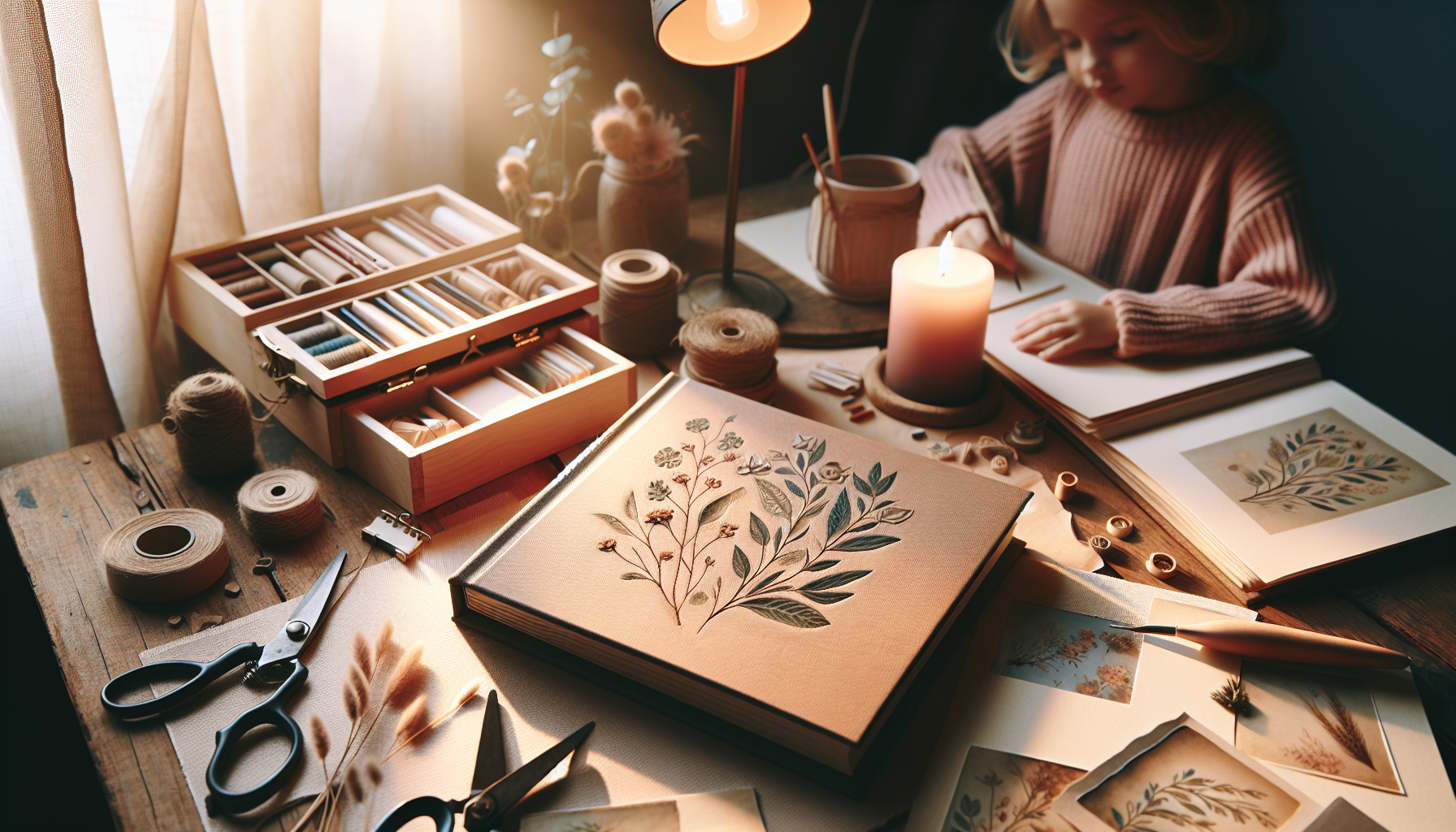
Book repair has never been a glamorous pursuit, but it has always been a necessary one. Libraries, private collectors, and devoted readers have long struggled with the same problems: cracked spines, detached boards, foxed pages, and fragile bindings that no longer hold. In the last decade, however, something has shifted. Book repair kits aimed at non-specialists have proliferated, and the practice of mending one's own volumes has acquired a following far beyond the conservation lab.
The materials driving this shift are not new. PVA (polyvinyl acetate) adhesive has been the bookbinder's glue of choice since the 1960s, prized for its flexibility when dry, its reversibility under moisture, and its archival neutrality. Japanese tissue — a family of thin, long-fibered papers made from kozo, gampi, or mitsumata plant fibers — has been used in paper conservation for over a century. The bone folder, a smooth tool carved from animal bone or, increasingly, Teflon, is indispensable for creasing, burnishing, and manipulating paper without bruising its surface. None of these tools required invention; they required packaging.
The American Institute for Conservation (AIC), founded in 1972 and headquartered in Washington, D.C., has been central to establishing the standards that trickle down into consumer repair kits. Its Guide to Caring for Your Collections (available at culturalheritage.org) emphasizes the principle of reversibility — any repair should be undoable without causing further damage. This philosophy distinguishes archival repair from mere patching, and it is the principle that separates a $40 conservation kit from a roll of household tape.
The Library of Congress Preservation Directorate publishes free care and handling leaflets for paper-based materials, covering everything from proper shelving posture to the correct way to open a stiff new binding. Their recommendations — never force a spine, always support a volume's full weight, avoid rubber bands and acidic enclosures — are the practical bedrock on which commercial kits are built. The Library's Northeast Document Conservation Center (NEDCC), based in Andover, Massachusetts, goes further, offering Preservation Leaflets downloadable at no cost at nedcc.org. Leaflet 7.1, "Mending and Repairing Paper," is particularly relevant for home practitioners.
What does a serious repair kit actually contain? Mid-range kits priced between $30 and $80 — the range where most dedicated amateurs shop — typically include a small bottle of PVA glue (pH-neutral, archival grade), several sheets of Japanese tissue in varying weights (3 gsm to 12 gsm), a bone folder, a microspatula or palette knife for applying adhesive, book repair cloth or buckram for spine replacement, a small brush, wax paper for protecting surfaces during drying, and printed instructions. Brands such as Bookbinding.com, Talas (Technical Library Service, founded in New York in 1962), and Colophon Book Arts Supply have built reputations for supplying conservation-grade materials to both institutions and individuals. Talas's catalog (talasonline.com) lists dozens of Japanese tissue variants alone, a reminder of how specialized the field becomes at its professional end.
The most common home repairs fall into a few categories. Loose hinges — where the cover board has separated from the text block but the spine remains intact — can be repaired with a thin strip of Japanese tissue and diluted PVA, worked into the gutter with a microspatula. Detached boards require a more involved process: cleaning old adhesive residue, cutting new super (the open-weave fabric that connects the book block to its covers), and re-adhering with full-strength PVA under even pressure from binder's clamps or improvised weights. Torn pages, provided they are complete tears rather than losses, can be mended invisibly with 3-gsm Japanese tissue and wheat starch paste — a mixture that dries nearly transparent and adds almost no visual bulk.
Spine repairs are more demanding. When the original spine cloth has split, or the title label has lifted, a decision must be made: rebind, reback, or consolidate. Rebacking — removing the old spine material and replacing it while retaining the original boards — is the preferred conservation approach for valuable volumes. It requires cutting the old spine away cleanly, preparing new spine cloth (book cloth or archival leather), and attaching the boards with a method that matches the original binding style. For hollow-back bindings common in late 19th- and early 20th-century commercial editions, the repair is more straightforward than for tight-back bindings, where the spine cloth is glued directly to the book block.
The pedagogical infrastructure for these skills has grown substantially. The North Bennet Street School in Boston, founded in 1885, offers bookbinding and book conservation courses that draw students from across North America. The American Bookbinders Museum in San Francisco maintains a library and archive documenting the history of the trade. Online, the YouTube channel of book conservator Rhett Beavers has accumulated hundreds of thousands of views for straightforward repair tutorials that make the techniques accessible without oversimplifying them.
For those whose concern is specifically with leather bindings — the red-rot problem that afflicts untreated calf and sheepskin covers — the British Museum Leather Dressing (a blend of anhydrous lanolin and cedarwood oil) remains the standard treatment, applied sparingly and buffed to a low sheen. Cellugel, a solution of hydroxypropyl cellulose in isopropanol, consolidates friable leather surfaces without introducing moisture. Both products are available through Talas and similar suppliers.
The economics of book repair are worth addressing plainly. A professional rebinding by a conservator in good standing with the AIC costs, depending on the complexity, between $150 and $600 for a single volume. For a first edition with significant monetary or sentimental value, this expenditure is rational. For a reading copy of a favorite novel with a cracked spine, it is not. The $40–$80 repair kit occupies a sensible middle ground: it equips a careful amateur to perform structurally sound repairs on volumes of moderate value, extending their useful life by decades.
The mindfulness framing that has attached itself to book repair in recent popular writing — the idea that mending a book is a form of slow, attentive practice — is not wrong, exactly, but it risks obscuring the craft's fundamentally practical character. Books are repaired because they are useful, because their texts are worth preserving, and because the physical object carries meaning beyond its information content. The pleasure of a well-executed repair is real, but it is the pleasure of competence, not meditation.
Sources & Further Reading
- American Institute for Conservation. Guide to Caring for Your Collections. culturalheritage.org
- Northeast Document Conservation Center. Preservation Leaflets, especially Leaflet 7.1: "Mending and Repairing Paper." nedcc.org
- Library of Congress, Preservation Directorate. Care, Handling, and Storage of Books. loc.gov
- Talas Online. Conservation and bookbinding supplies catalog. talasonline.com
- Greenfield, Jane. The Care of Fine Books. Nick Lyons Books, 1988.
- Morrow, Carolyn Clark, and Cara Diekman. Conservation Treatment Procedures. Libraries Unlimited, 1986.